Highlights:
- Choose the Right Type of Rose – Select varieties that match your garden space, climate, and maintenance preference, such as hybrid teas for cutting, floribundas for color, or climbers for vertical interest.
- Plant in Optimal Locations – Ensure roses receive at least 6 hours of sunlight, good air circulation, well-draining soil, and enough spacing to prevent disease and overcrowding.
- Prepare Soil Properly – Use rich, loose, slightly acidic soil (pH 6.0–6.5) enriched with compost or aged manure to promote strong roots and healthy growth.
- Water and Fertilize Consistently – Deep water 2–3 times per week, avoid wetting leaves, and feed regularly with balanced or organic fertilizers to encourage blooms and prevent stress.
- Prune for Health and Blooms – Remove dead or diseased wood, cut weak or crossing stems, and shape the plant to improve airflow and stimulate flowering.
- Manage Pests and Diseases – Monitor for common pests like aphids or spider mites, prevent fungal diseases with good spacing and airflow, and use natural or chemical controls when necessary.
- Enhance Enjoyment and Aesthetics – Use companion plants, mix colors and heights, create pathways, and cut blooms for indoor arrangements to fully enjoy the beauty and fragrance of your roses.
Roses are often called the “queen of flowers,” and for good reason. They bring elegance, fragrance, and color to any garden. But growing roses successfully isn’t always as simple as planting a bush and watering it. With the right knowledge, techniques, and attention to detail, anyone can cultivate healthy, vibrant roses that bloom beautifully year after year. In this guide, we’ll walk you through everything you need to know about how to grow roses successfully in your garden.
Why Do Roses Need Special Care?
Roses are hardy in many climates, but they do require some attention to thrive. Unlike some low-maintenance plants, roses can be susceptible to pests, diseases, and environmental stresses. Understanding their needs—like sunlight, soil, and watering—is the first step toward successful growth. Think of it as giving your roses a little extra love to get a lot in return.
What Type of Roses Should You Plant?

Not all roses are created equal. The type you choose will depend on your garden space, climate, desired bloom style, and maintenance preferences. Here’s a more detailed look at popular rose types:
- Hybrid Tea Roses – These are the classic roses with large, single blooms on long stems. Perfect for cutting and floral arrangements, hybrid teas are ideal if you want show-stopping flowers. They usually bloom repeatedly, but some varieties require more attention to prevent disease.
- Floribunda Roses – Floribundas produce clusters of smaller flowers, offering a more continuous splash of color in borders or beds. They’re generally easier to care for than hybrid teas and can withstand some adverse conditions.
- Climbing Roses – These roses grow vertically, making them perfect for fences, trellises, or arbors. They can cover unsightly structures and create a dramatic vertical garden feature. Keep in mind, climbers need regular support and pruning to train their growth.
- Shrub Roses – Shrub roses are hardy, versatile, and often disease-resistant. They come in a variety of sizes and shapes, making them great for low-maintenance gardens or naturalistic landscaping. Some varieties bloom continuously throughout the season.
- Miniature Roses – Mini roses are compact and ideal for containers, window boxes, or small patios. Despite their size, they produce charming blooms and can thrive indoors if given sufficient light. They’re a perfect choice if space is limited or if you enjoy potted gardening.
Choosing the right type ensures your garden matches your style and your roses thrive without unnecessary challenges.
Where Should You Plant Your Roses?
Location is everything when it comes to growing roses successfully. Here’s how to find the perfect spot:
- Sunlight – Roses need at least 6 hours of sunlight each day, with morning sun being ideal. Morning sun dries dew on the leaves, reducing the risk of fungal diseases. If you live in extremely hot climates, a little afternoon shade can prevent scorching.
- Air Circulation – Good airflow is crucial for preventing disease. Avoid planting roses too close together or in areas where wind is blocked. Proper spacing not only reduces disease but also encourages healthy growth.
- Soil Drainage – Roses don’t like standing water. Slightly elevated areas or beds with good drainage help prevent root rot. If your garden has heavy clay soil, amend it with compost or sand to improve drainage.
- Space – Crowding increases the risk of pests and diseases. Generally, allow at least 18–36 inches between bushes, depending on the variety, to ensure room for growth and airflow.
By choosing the right location, you’re giving your roses the best start possible.
What Kind of Soil Do Roses Prefer?
Roses thrive in rich, loose, well-draining soil. Here’s what to look for:
- pH Level – Aim for a soil pH between 6.0 and 6.5. Soil testing kits are inexpensive and easy to use. Slightly acidic soil allows roses to absorb essential nutrients more effectively.
- Soil Type – Loamy soil is ideal because it balances drainage and nutrient retention. Heavy clay soil can be amended with compost, peat moss, or sand, while sandy soil benefits from organic matter to retain moisture.
- Nutrients – Roses are heavy feeders and thrive in soil rich in organic matter. Mix in aged manure, compost, or leaf mold to supply nutrients naturally.
- Drainage – Poor drainage can lead to root rot and stunted growth. Consider raised beds if your garden retains water or has compacted soil.
Healthy soil is the foundation for strong roots, vigorous growth, and abundant blooms.
How Do You Plant Roses Step by Step?
Proper planting is crucial to long-term success. Here’s a detailed step-by-step guide:
- Choose Your Spot – Pick a location with adequate sunlight, good airflow, and well-draining soil.
- Prepare the Soil – Dig a hole twice as wide as the root ball and mix in compost or organic matter. Loosen the soil at the bottom for better root penetration.
- Inspect the Roots – For bare-root roses, soak them in water for several hours before planting. Trim any damaged or overly long roots to encourage healthy growth.
- Plant at the Right Depth – For grafted roses, the graft union (where the rose is attached to the rootstock) should sit at soil level in warm climates, slightly below in colder regions to protect it from frost.
- Backfill and Water – Fill the hole with soil, gently firm it around the roots, and water thoroughly to eliminate air pockets.
- Mulch – Apply 2–3 inches of organic mulch like wood chips or straw around the base. Mulch retains moisture, suppresses weeds, and regulates soil temperature.
Planting with care gives roses a strong foundation to flourish in your garden.
How Often Should You Water Roses?
Watering correctly is essential for healthy growth. Overwatering or underwatering can stress the plant:
- Frequency – Deep watering 2–3 times a week is usually sufficient. Adjust depending on rainfall, temperature, and soil type.
- Time of Day – Morning watering is best, giving leaves time to dry before evening.
- Technique – Water at the base of the plant rather than the leaves to prevent fungal infections.
- Signs of Underwatering – Wilting leaves, dry soil, slow growth, or buds dropping prematurely.
- Signs of Overwatering – Yellowing leaves, soggy soil, moldy roots, and root rot.
Maintaining consistent soil moisture ensures strong roots and vibrant blooms.
What Fertilizers Work Best for Roses?
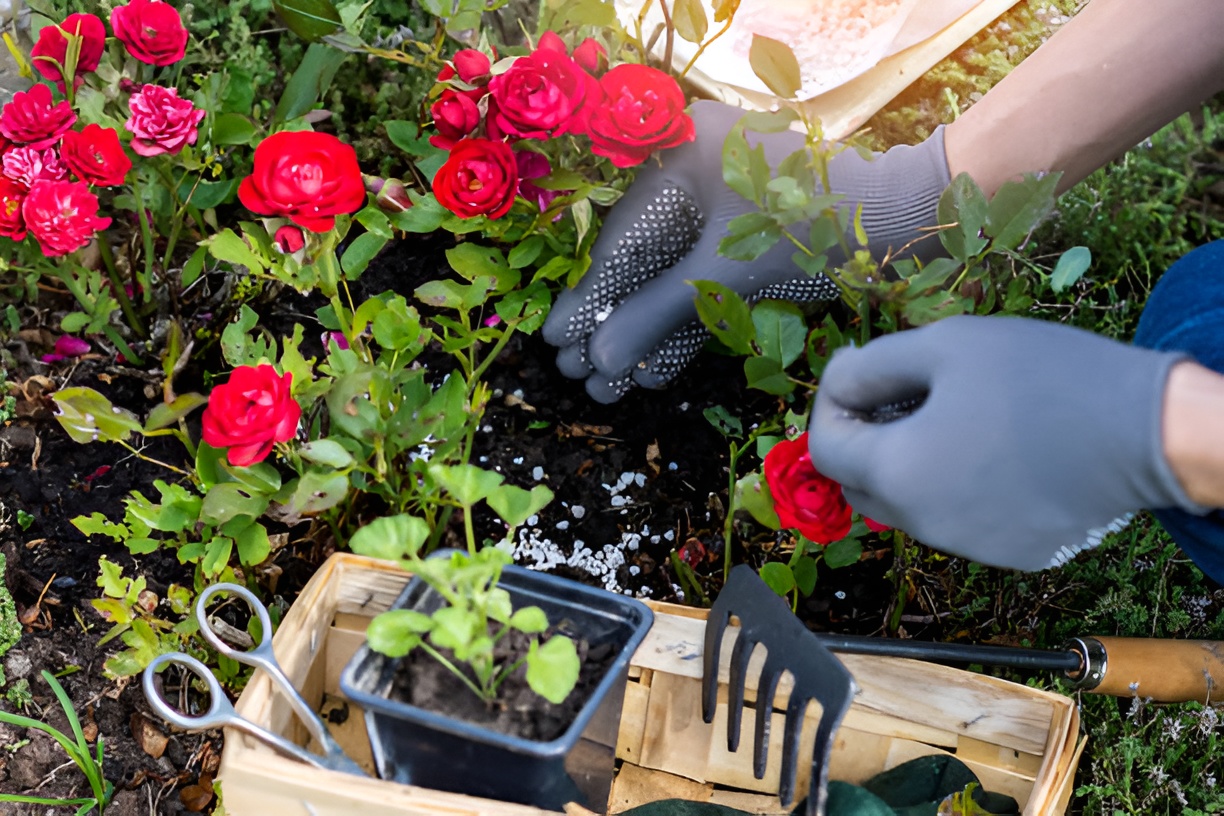
Roses need regular feeding to support strong growth and blooms:
- Balanced Fertilizers – Use a balanced NPK formula like 10-10-10 for healthy growth, root development, and blooms.
- Organic Options – Compost, fish emulsion, or well-rotted manure provide natural nutrients and improve soil structure.
- Timing – Feed in early spring, after the first bloom, and again mid-season. Avoid late-season fertilization in fall to prevent tender growth before winter.
- Application Tips – Follow package instructions, water after fertilizing, and avoid getting fertilizer on leaves to prevent burning.
Proper fertilization keeps roses strong, disease-resistant, and continuously blooming.
How Do You Prune Roses Properly?
Pruning encourages healthy growth, abundant blooms, and proper shape:
- When to Prune – Early spring, just as new buds start to swell. Some varieties may also benefit from light pruning after summer blooms.
- Tools – Sharp, clean pruning shears prevent damage and disease spread. Consider long-handled loppers for thick branches.
- Steps –
- Remove dead, diseased, or damaged wood.
- Cut back weak or crossing stems to improve air circulation.
- Shape the plant for size and aesthetic appeal.
- Aftercare – For large cuts, consider applying pruning sealant to protect the plant. Disinfect tools between cuts if disease is present.
Pruning is both an art and a science—done right, it promotes vigorous, blooming plants.
How Can You Deal with Pests and Diseases?
Roses attract certain pests and are susceptible to diseases, but proactive care keeps them healthy:
- Common Pests – Aphids, spider mites, Japanese beetles, and rose slugs.
- Preventive Measures – Encourage beneficial insects, maintain spacing for airflow, and avoid overhead watering.
- Natural Remedies – Neem oil, insecticidal soaps, or a strong water spray can control infestations.
- Diseases – Black spot, powdery mildew, and rust are common fungal problems.
- Control Tips – Remove affected leaves, improve airflow, mulch to reduce soil-borne pathogens, and apply fungicides if necessary.
Vigilance and early intervention are key to keeping roses thriving.
Can Companion Plants Help Your Roses?
Planting compatible flowers and herbs can improve rose health and enhance your garden’s beauty:
- Lavender – Repels pests and attracts pollinators.
- Marigolds – Acts as a natural pest deterrent, especially against nematodes.
- Alliums – Their sulfur compounds help prevent fungal issues.
- Geraniums – Deter Japanese beetles and aphids while adding color.
Companion plants also create a visually appealing, fragrant garden environment.
How to Encourage More Blooms
If your goal is abundant, continuous blooms:
- Deadhead spent flowers regularly to encourage new growth.
- Feed with phosphorus-rich fertilizers to boost blooms.
- Ensure at least 6 hours of sunlight per day.
- Maintain consistent watering and healthy, nutrient-rich soil.
Healthy care routines produce roses that bloom consistently and vibrantly.
How Do You Overwinter Roses?
Protecting roses in winter ensures they return strong in spring:
- Mulch Heavily – Add extra mulch around the base for insulation.
- Prune Lightly – Remove dead or weak stems but avoid hard pruning.
- Cover Sensitive Varieties – Use burlap, rose cones, or cloches in cold climates.
- Water Moderately – Keep soil slightly moist but not wet to avoid frost damage.
Winter preparation minimizes damage and supports healthy spring growth.
Can Roses Be Grown in Containers?
Yes! Container gardening makes roses accessible for patios, decks, and small spaces:
- Choose a Large Pot – At least 12–15 inches deep with good drainage holes.
- Use Quality Soil – A rich potting mix with compost ensures nutrients and moisture retention.
- Water Frequently – Containers dry out faster than garden beds, so monitor soil moisture closely.
- Fertilize Often – Container roses need additional nutrients, especially during active growth.
Container gardening allows you to grow beautiful roses even without a traditional garden space.
What Mistakes Should You Avoid?
Even experienced gardeners can make errors that hinder rose growth.
- Planting in shady areas.
- Overcrowding plants.
- Overwatering or underwatering.
- Neglecting pruning and deadheading.
- Ignoring signs of pests or diseases.
By avoiding these mistakes, your roses will have the best chance of thriving.
How Long Does It Take for Roses to Grow?
The timeline varies depending on the type and growing conditions:
- Bare-Root Roses – Establish in 1–2 seasons.
- Potted Roses – May bloom in the first year.
- Climbing Roses – Take longer to reach full height, 2–3 years.
Patience and consistent care are key to success.
Why Should You Keep a Rose Journal?
Tracking your roses can help you improve growth each season:
- Note planting dates and varieties.
- Record fertilization and pruning schedules.
- Track bloom cycles and disease issues.
- Make notes on what works and what doesn’t.
A journal helps you refine your rose-growing strategy over time.
How to Enjoy Your Roses in the Garden
Roses aren’t just beautiful—they’re meant to be enjoyed. With a little planning, you can make your garden a sensory experience that delights the eyes, nose, and even your home interior. Here are some ideas to get the most out of your rose garden:
- Create Romantic Pathways – Line garden paths with roses to create a charming, romantic walkway. Choose varieties that bloom at different heights and colors to add depth and dimension. Fragrant roses along the path can make every stroll feel like a sensory escape.
- Plant Near Seating Areas – Position rose bushes near patios, benches, or gazebos. This way, you can enjoy the fragrance up close while relaxing or entertaining guests. Combine different types of roses to ensure blooms throughout the season.
- Cut Flowers for Indoor Arrangements – Bring the beauty of your garden inside. Roses are excellent for bouquets, table arrangements, or even casual vases around your home. Deadhead spent blooms from the bush and use them for cut flower arrangements, which encourages the plant to produce more flowers.
- Mix Colors and Types for Visual Interest – Don’t limit yourself to a single color or rose type. Mixing hybrid teas, floribundas, and shrub roses in complementary shades creates a dynamic and visually appealing garden. Layering roses of different heights also adds texture and dimension.
- Incorporate Fragrant Varieties – While visual appeal is important, fragrance is one of the joys of growing roses. Plant highly fragrant varieties near windows, doors, or seating areas to enjoy their scent every day.
- Combine with Companion Plants – Surround roses with low-growing herbs or perennials like lavender, salvia, or thyme. This not only adds color and texture but also attracts pollinators, enhancing the overall garden experience.
In a Nutshell
Growing roses successfully takes patience, attention, and a little practice. By following these tips and understanding your roses’ needs, you can cultivate a garden full of vibrant, fragrant blooms that will delight you year after year. Whether you’re a beginner or an experienced gardener, these strategies will help you master how to grow roses successfully in your garden.