Video Source
How Does Algae Affect Pond Health?
Depletion of Oxygen Levels
Algae blooms can deplete the oxygen levels in your pond, especially during the night when photosynthesis ceases. This reduction in oxygen can lead to hypoxic conditions, ultimately endangering fish and other aquatic life.
A well-oxygenated pond is crucial for a balanced ecosystem, and excessive algae can significantly disrupt this balance.
Impact on Fish and Aquatic Life
Ponds teeming with unmanaged algae can become inhospitable environments for fish and other aquatic creatures. Besides oxygen depletion, certain types of algae can produce toxins harmful to fish and plants, further throwing off the ecological harmony of your pond. Therefore, effective algae control is essential for sustaining healthy aquatic life.
Influence on Water Clarity
One of the most noticeable effects of algae overgrowth is the decline in water clarity. Algal blooms can turn clear pond water murky and green, detracting from the pond’s aesthetic value and making it difficult to see the vibrant life beneath the surface. Clear water is not only more visually pleasing but also contributes to a healthier pond environment.
What Causes Algae to Flourish in Ponds?
Excessive Nutrients
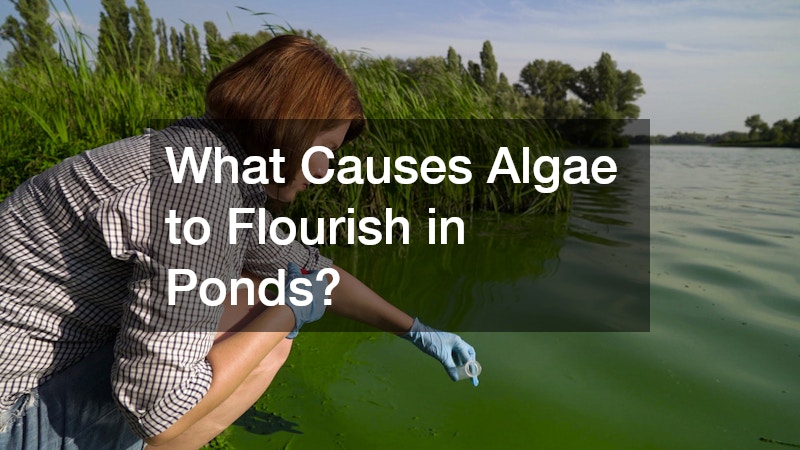
Algae thrive on nutrients, particularly nitrogen and phosphorus, which often enter ponds through runoff from fertilizers or decaying organic matter. High nutrient levels provide the perfect breeding ground for algae, leading to rapid growth and potential blooms.
Sunlight Exposure
Sunlight plays a crucial role in the growth of algae, and ponds that are exposed to excessive sunlight are significantly more prone to experiencing algal overgrowth. This abundance of algae can create an imbalance in the ecosystem of the pond, leading to complications such as reduced oxygen levels, which can harm fish and other aquatic life. Additionally, algal overgrowth can lead to unpleasant odors and a reduction in the aesthetic appeal of the water feature.
Lack of Water Circulation
Poor water circulation in a pond can create stagnant areas where algae can grow unchecked, leading to several adverse effects on the pond’s ecosystem. These stagnant zones can become breeding grounds for mosquitoes and other insects, further exacerbating the ecological imbalance and causing potential discomfort or health concerns for people and animals nearby. Moreover, stagnant water often loses oxygen rapidly, resulting in an unhealthy environment that can be detrimental to fish and aquatic plants. Without proper circulation, beneficial bacteria that help in breaking down organic matter may not function effectively, leading to a buildup of detritus and harmful ammonia levels.
Can Algae Be Controlled Naturally?
Plant-Based Solutions
Introducing plant life can be an effective approach to managing algae naturally. Aquatic plants, especially those that float, compete with algae for nutrients and sunlight, curbing the growth of unwanted blooms. By absorbing excess nitrogen and phosphorus from the water, these plants reduce the nutrients that algae depend on to multiply. As a result, a well-planted pond can naturally limit algae growth while supporting a healthier aquatic environment.
Biological Controls
Biological control options include introducing certain species of fish that feed on algae, such as grass carp or plecostomus, to your pond. These allies can help maintain algae levels and contribute to a balanced ecosystem. By naturally grazing on algae and plant material, these fish reduce the buildup that can otherwise overwhelm a pond when left unmanaged. Their feeding habits can slow the spread of algae growth and help maintain clearer water over time.
Manual Removal Methods
Regular manual removal of algae is also necessary for maintaining pond health. Skimming algae off the surface and cleaning debris can help manage growth, keeping your pond clear and clean. Using tools such as pond nets, skimmers, or specialized rakes allows pond owners to remove floating algae mats and accumulated organic material before they break down and release additional nutrients into the water. Addressing these buildups early can prevent small algae patches from developing into widespread blooms.